Case Studies: Brand Dilution in Regulated M&A

Case Studies: Brand Dilution in Regulated M&A
Mergers in regulated industries like iGaming, cryptocurrency, Forex, and Fintech often face a critical challenge: maintaining brand equity. When trust and compliance are key, neglecting brand strategy during a merger can lead to confusion, loss of customer trust, and even financial write-downs.
Key Takeaways:
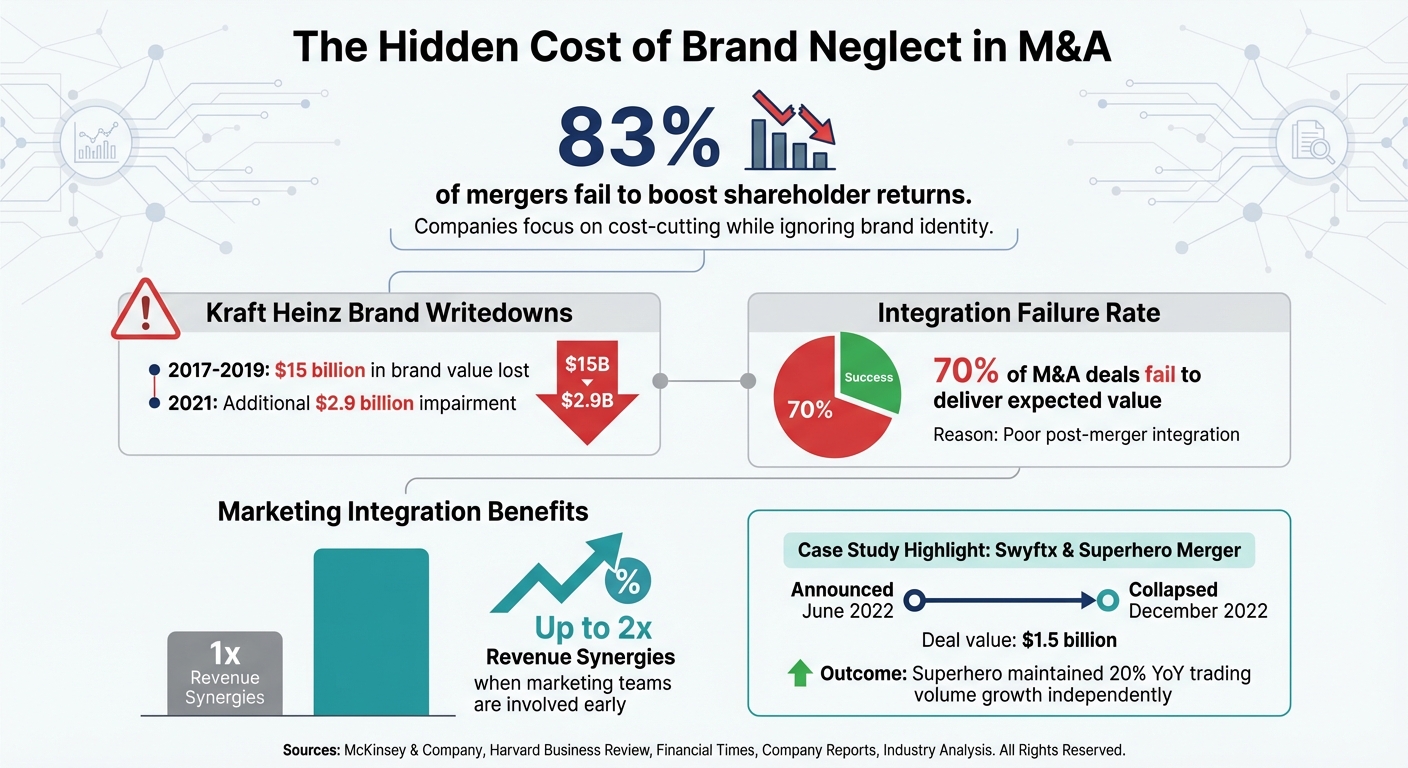
- 83% of mergers fail to boost shareholder returns because companies focus on cost-cutting and operational integration while ignoring brand identity.
- Examples like Kraft Heinz show how neglecting brand equity can result in billions in losses, while Disney’s acquisition of Pixar demonstrates the value of preserving brand identity.
- Regulated industries face added complexities like licensing and compliance, making brand preservation even more important.
Lessons From Case Studies:
- iGaming M&A Failures: Prioritizing cost-cutting over brand identity often erases distinctiveness and trust.
- Crypto Merger Collapse: Swyftx and Superhero’s $1.5B merger fell apart due to regulatory hurdles and market instability.
- Fintech Success: A thoughtful approach to preserving brand identity and leadership led to a successful acquisition.
Solutions to Prevent Brand Dilution:
- Conduct brand equity assessments during due diligence.
- Involve marketing leaders early to align branding strategies.
- Use verified platforms like MyReadyMade for secure, NDA-protected M&A processes in regulated sectors.
Bottom Line: M&A success in regulated industries depends on balancing financial goals with deliberate brand management. Neglecting this balance risks losing customer trust and long-term value.
The Risk of Integrating Your Brand Too Slowly - Finch Brands M&A Minute - Episode 1
3 Case Studies of Brand Dilution in Regulated M&A
The following examples highlight how brand dilution can occur in regulated industries when companies focus more on operational efficiencies than on a thoughtful brand strategy. These cases showcase varying outcomes and provide insights for strategies to avoid similar pitfalls.
Case Study 1: iGaming Brand Integration Failure
In the iGaming industry, billion-dollar acquisitions are commonplace. However, these mergers often lead to the loss of brand identity as companies prioritize operational consolidation over brand uniqueness. Many acquired brands remain independent for only a short time before being absorbed into larger entities, erasing their distinctiveness [3].
This phenomenon, often referred to as the "M&A brand trap", happens when cost-cutting measures take precedence over safeguarding brand identity [2]. As decision-making shifts from founders and product teams to corporate boards, the original culture and customer relationships that built the brand's value often deteriorate. This is compounded by reduced investments in advertising and innovation, which further erode customer loyalty and market share. In regulated industries like iGaming, where trust and compliance are critical, such missteps can have significant consequences [2]. This example highlights the need for a deliberate approach to preserving brand integrity during mergers.
Case Study 2: Failed Cryptocurrency Platform Merger
In June 2022, Australian crypto exchange Swyftx and share trading platform Superhero announced a $1.5 billion merger. Their goal was to create a "financial super-app" that would combine crypto and traditional equities. However, by December 2022, the merger was undone through a management buyout led by Superhero's founders, John Winters and Wayne Baskin [5].
Regulatory challenges and market instability played a significant role in the collapse of the merger. Following the FTX fallout, Swyftx had to cut 40% of its workforce, and warnings from ASIC further complicated the integration process [5]. These obstacles prevented the companies from achieving their shared vision, leaving them to operate independently.
John Winters explained:
"The volatility in the market as well as the current regulatory environment has made it increasingly difficult to achieve the initial vision that inspired the merger earlier this year."
- John Winters, Co-founder, Superhero [5]
Similarly, Alex Harper of Swyftx commented:
"The policy environment has changed significantly since we announced the merger and neither party has been able to realise the vision of the merger in any meaningful way." [5]
Interestingly, Superhero still reported a 20% year-over-year increase in trading volumes in 2022, suggesting that keeping the brands separate might have been the smarter move. This case emphasizes how regulatory hurdles and market dynamics can derail even the most ambitious brand integration plans.
Case Study 3: Fintech Acquisition with Successful Brand Preservation
In contrast to the previous examples, a fintech acquisition demonstrated how preserving brand identity can lead to success [1].
What set this case apart was the acquirer's commitment to maintaining the target company's culture, leadership, and operational processes rather than enforcing immediate assimilation [2]. Conducting brand-specific due diligence alongside financial evaluations allowed the buyer to identify key elements to protect, ensuring the brand's competitive edge and compliance standards remained intact.
In regulated industries, there’s a growing trend of prioritizing long-term brand strength and pricing power over short-term growth potential [4]. This approach underscores how safeguarding brand equity can serve as a cornerstone for sustained value in M&A deals.
Lessons Learned from Brand Dilution Case Studies
Pre-Merger Due Diligence Requirements
Case studies highlight a common oversight during mergers: brand equity often takes a backseat. A KPMG study found that 83% of mergers fail to improve shareholder returns because companies prioritize financial and operational synergies while overlooking brand strength [2]. Assuming that a recognizable name automatically translates to strong brand equity can lead to overpaying and poor integration outcomes.
Take Kraft Heinz as an example. After its 2015 merger, the company focused heavily on cost-cutting and operational efficiencies. Advertising budgets were slashed, and investments in innovation dwindled. The result? From 2017 to 2019, Kraft Heinz had to write down the value of its Kraft and Oscar Mayer brands by over $15 billion. In 2021, another $2.9 billion impairment charge followed [2].
What sets successful acquirers apart is their approach to brand value. They treat it as a critical factor, conducting thorough brand equity assessments and analyzing customer perceptions before closing deals. They also ensure that the brand’s culture aligns with the buyer’s values. This kind of preparation lays the groundwork for smooth communication and integration, which are explored further below.
Communication and Integration Strategies That Work
Once due diligence is complete, strategic communication becomes essential to protect brand identity during integration. A great example of this is Disney’s acquisition of Pixar. Disney retained Pixar’s leadership and creative processes, preserving its unique identity. Compare this to Kraft Heinz, where aggressive cost-cutting eroded brand value [2].
One key takeaway? Branding decisions should involve marketing leaders - not just legal and financial teams. As Presciant puts it:
Companies merge, brands don't [2].
For successful integration, organizations should create cross-functional teams early in the process. These teams, with members from both companies, help align values, messaging, and customer experience.
It’s worth noting that 70% of M&A deals fail to deliver expected value due to poor post-merger integration [6]. Best practices include starting integration planning during the due diligence phase. This means identifying key leaders, organizing essential functions, and planning how the brand portfolio will evolve over time - not just focusing on launch day.
Using Specialized Marketplaces for Regulated Deals
In regulated industries, brand dilution risks are even greater due to additional complexities like license transfers, antitrust requirements, and compliance across jurisdictions. Here, specialized platforms play a crucial role in navigating these challenges and ensuring smooth transitions.
For instance, MyReadyMade (https://myreadymade.com) addresses these challenges with features like verified listings, NDA-protected communications, and industry-specific M&A advisory services. Catering to sectors such as iGaming, Cryptocurrency, Forex, and Fintech, the platform facilitates license transfers in over 50 jurisdictions and offers 24/7 deal support.
Leveraging a verified marketplace ensures transparency and access to accurate information about licensing, compliance history, and brand equity before finalizing a deal. This minimizes surprises and regulatory hurdles that could derail integration efforts.
How to Prevent Brand Dilution in Regulated M&A
Creating a Post-Merger Integration Plan
Integration planning should start during the due diligence phase - not after the deal is finalized. Begin by evaluating the brand equity of both companies, often with the help of third-party experts, to decide whether to keep one brand, merge the two, or create a new identity that maximizes value [7]. Research shows that companies incorporating marketing integration can achieve up to double the revenue synergies [7]. Engaging both marketing teams early allows the combined company to identify where its value lies and establish clear, measurable objectives.
A strong integration plan should cover several critical areas. These include creating a phased communication strategy for media, suppliers, and customers; auditing all assets, from digital platforms to physical branding materials [7]; and aligning workflows by integrating content calendars and collaboration tools across teams.
Rebranding, while often necessary, is both expensive and intricate. It requires careful budgeting for public relations, marketing efforts, and legal updates [7]. As DealRoom highlights:
Changing a company's brand or marketing can be surprisingly traumatic for customers. Humans are creatures of habit [7].
This emphasizes the need to prioritize customer familiarity, especially in new markets where changing a recognized brand might alienate loyal customers. Once an integration plan is in place, the focus can shift to managing the brand identities within the new organization.
Managing Brand Portfolios for Different Customer Segments
Managing a brand portfolio effectively requires crafting a long-term brand strategy that goes far beyond the initial launch. The goal is to ensure that different brands can coexist or evolve without confusing customers.
Avoid creating "Frankenstein" brands - awkward hybrids that blend two identities and end up weakening both. Instead, analyze customer perceptions to maintain distinct brand identities and preserve the emotional connections customers have with each brand.
A great example of this is Disney’s acquisition of Pixar. By keeping Pixar’s unique culture and leadership intact, Disney not only benefited from Pixar’s successful films but also revitalized its own animation studio [2].
Branding decisions should be guided by marketing strategy, not left solely to legal or financial teams. Yitzchak Grant from Presciant puts it succinctly:
Future customers don't care about your synergy targets. They care about clarity, meaning, and relevance [2].
Focusing only on cost-cutting while neglecting advertising and innovation can backfire. Kraft Heinz is a cautionary tale; the company suffered over $15 billion in brand writedowns after prioritizing cost reductions over brand equity [2]. These examples highlight the importance of preserving brand identity in regulated environments.
Benefits of Verified Platforms for Confidential Transactions
Verified platforms play a vital role in handling sensitive transitions within regulated industries. These platforms allow leadership to conduct thorough brand audits in a secure, private setting, helping them identify and capitalize on core strengths before the merger becomes public knowledge [1].
MyReadyMade (https://myreadymade.com) offers specific tools for regulated M&A deals. Its verified listings and NDA-protected communication features provide a secure environment for analyzing market dynamics and deciding on the best brand architecture - whether that means establishing a master brand, creating sub-brands, or maintaining separate identities. The platform also supports license transfers across more than 50 jurisdictions and offers 24/7 deal assistance, simplifying compliance challenges that could otherwise disrupt integration efforts.
Confidential platforms also allow cross-functional teams to align brand cultures early in the process. By identifying cultural strengths and potential barriers during the private phase, teams can craft clear communication strategies that prevent brand confusion when the merger is announced. This approach helps maintain stakeholder trust and ensures the new entity showcases the best qualities of both brands while preserving clear market differentiation [1]. These early efforts lay the foundation for a unified integration strategy, addressing the brand dilution risks discussed in these case studies.
Conclusion
Summary of Case Study Lessons
Looking at regulated M&A transactions, one thing stands out: brand equity must be a priority from the start. Research from KPMG highlights that 83% of mergers fail to increase shareholder returns, often because companies focus on operational integration while neglecting their brand strategies [2]. A prime example is Kraft Heinz, where aggressive cost-cutting measures severely damaged brand equity, leading to massive writedowns worth billions [2].
On the flip side, Disney’s acquisition of Pixar showcases the benefits of respecting and preserving brand culture. By allowing Pixar to retain its independent storytelling process, Disney not only safeguarded Pixar’s identity but also strengthened its own brand [2]. The takeaway? Success in regulated industries hinges on striking the right balance between integration and autonomy. These lessons set the stage for actionable strategies to protect brand equity in future M&A deals.
Final Recommendations for Managing Brand Dilution
The case studies make one thing abundantly clear: thriving in regulated M&A deals requires meticulous financial planning paired with intentional brand management. Start by addressing brand equity during the due diligence phase. Running brand valuations alongside financial modeling ensures that brand equity is treated as a critical asset, not an afterthought [2]. As Yitzchak Grant from Presciant puts it:
If brand isn't part of the deal model, the model is broken [2].
Another key strategy is to avoid creating mismatched "Frankenstein" brands that confuse customers and dilute value. Instead, conduct thorough brand audits to identify the strongest name and design a long-term brand architecture that stays consistent and relevant [2]. Marketing leaders must have a seat at the table to ensure branding decisions aren’t driven solely by legal or financial convenience.
For industries like iGaming, cryptocurrency, Forex, and Fintech, navigating regulatory challenges while protecting brand equity is no small feat. Confidential transaction platforms like MyReadyMade (https://myreadymade.com) offer valuable tools, including verified business listings, NDA-protected communications, and expert M&A advisory across over 50 jurisdictions. These resources enable teams to perform in-depth brand audits and cultural alignment checks before deals become public, helping preserve brand value while managing the complexities of regulated markets.
FAQs
How can you measure brand equity during M&A due diligence?
When assessing brand equity during M&A due diligence, it's essential to examine the core brand assets. These include trademarks, domain names, social media presence, and the brand's overall reputation in the market.
It's also a good time to identify opportunities to streamline branding efforts. For instance, redundant brands can often be consolidated or phased out to simplify operations and strengthen the primary brand.
To gauge the brand's long-term potential, tools like brand valuation and performance analysis come into play. These methods help provide a clearer picture of the brand's worth and its future role in the merger or acquisition, ensuring decisions are backed by data and insight.
When should an acquired brand stay independent instead of rebranding?
When a brand is acquired, keeping it independent can be crucial for maintaining its identity, core values, and the trust of its customers. This strategy ensures clarity, avoids weakening the brand’s image, and prevents potential conflicts. A great example is the integration of Disney and Pixar. Disney treated Pixar as a strategic asset, allowing it to retain its distinct identity and value, which contributed to the success of the partnership.
How do licensing and compliance affect brand integration in regulated deals?
Licensing and compliance play a key role in regulated transactions, ensuring all legal standards are met while minimizing risks - whether operational, legal, or reputational - during brand integration. Mismanaging these areas can lead to serious consequences, like weakening your brand's value or eroding trust among stakeholders. Prioritizing regulatory requirements is essential to safeguard your brand's reputation and keep the confidence of everyone involved.
Related Articles

Ultimate Guide to Earnout Negotiations in M&A
Structure and negotiate earnouts in regulated M&A with clear metrics, anti-manipulation covenants, and acceleration or escrow protections.

How to Draft M&A Definitive Agreements
Guide to drafting M&A definitive agreements covering deal structure, reps & warranties, indemnities, payment terms, and regulatory compliance.

How IP Affects Tokenization Valuation
How tokenizing patents, copyrights, and trademarks adds liquidity and market value—plus legal, regulatory, and valuation steps.
Looking to Buy or Sell?
Get in touch with our team for personalized assistance