Malta vs Curacao Gaming License: Full Comparison
Malta vs Curacao Gaming License: Full Comparison
When choosing a gaming license for your iGaming business, Malta and Curacao are two of the most common options. Here's the key difference: Malta offers a stricter, more reputable license ideal for accessing European markets, while Curacao provides a faster and more affordable licensing process aimed at startups and emerging markets.
Key Points:
- Malta License: Higher costs, longer approval (3–6 months), strong EU reputation, access to European markets, and comprehensive compliance requirements. Suitable for established businesses prioritizing credibility.
- Curacao License: Lower costs, faster approval (1–3 months), flexible tax system (2% on net profits), and crypto-friendly. Best for startups or businesses targeting global markets outside Europe.
Quick Comparison:
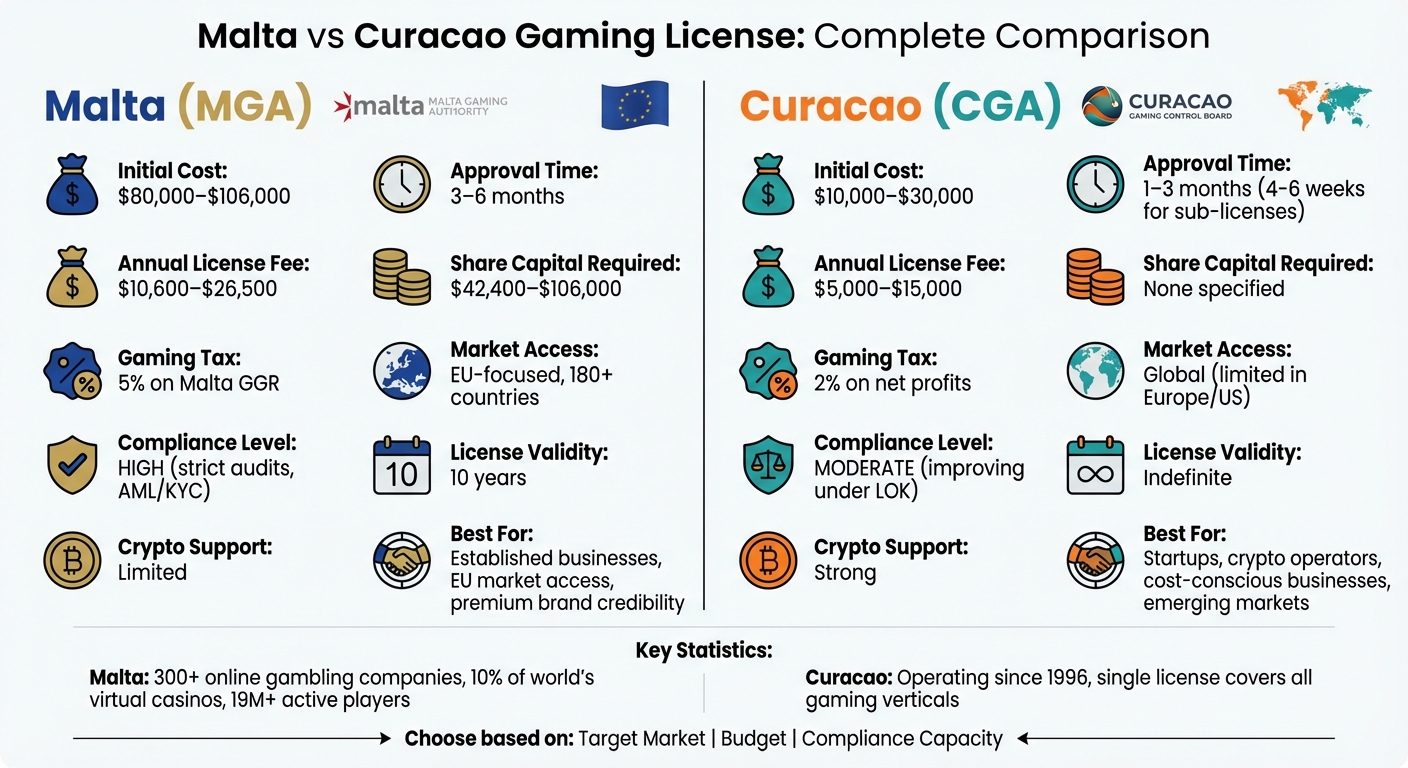
| Criteria | Malta (MGA) | Curacao (CGA) |
|---|---|---|
| Cost | $80,000–$106,000 (startup) | $10,000–$30,000 (startup) |
| Approval Time | 3–6 months | 1–3 months |
| Market Access | EU-focused | Global (but limited in Europe) |
| Tax | 5% on Malta GGR | 2% on net profits |
| Crypto Support | Limited | Strong |
| Compliance | High (strict audits, AML/KYC) | Moderate (improving under LOK) |
Malta is better for businesses seeking long-term growth in Europe, while Curacao is ideal for cost-conscious startups or crypto operators. Your choice should align with your market goals, budget, and compliance capacity.
New Curacao Gaming License Rules (What You Need to Know) | Adam Tracy
sbb-itb-ba142f6
Malta Gaming License Overview
The Malta Gaming Authority (MGA) serves as the sole regulator of all gaming activities in Malta under the Gaming Act of 2018. Over the years, Malta has built a reputation for its solid and reliable legal framework, which has become a standard in the gaming industry[7]. The country is home to more than 300 online gambling companies and oversees over 10% of the world's virtual casinos[7].
The MGA enjoys recognition from the United Kingdom Gambling Commission, allowing its license holders to operate within the UK market[2]. Combined with Malta's EU membership, this boosts operators' credibility when dealing with European banks, payment processors, and other essential service providers.
The regulatory framework in Malta is designed to be neutral with regard to both technology and game type, covering any gaming conducted through remote communication methods[9]. By 2020, MGA-licensed casinos had attracted over 19 million active players, and the gaming sector accounted for over 4.5% of Malta’s workforce[6]. The MGA also plays an active role in resolving disputes between players and operators, enforces strict care protocols to address gambling-related issues, and provides tools like self-exclusion to promote responsible gaming[2].
Key Features of the Malta Gaming License
The MGA offers two main license types: Business-to-Consumer (B2C) Gaming Service Licenses and Business-to-Business (B2B) Critical Gaming Supply Licenses. These are further categorized into four game types:
- Type 1: RNG-based casino games like slots and blackjack
- Type 2: Fixed-odds betting, such as sportsbooks
- Type 3: Peer-to-peer games, including poker and bingo
- Type 4: Controlled skill games and fantasy sports
One standout feature of the MGA license is its 10-year validity, which provides operators with long-term operational stability compared to annual renewals in many other jurisdictions[6]. However, this comes with stringent requirements. Applicants must be legal entities based in Malta or the EU/EEA, maintain a registered address in Malta, and host their gaming servers within the country. Additionally, each licensed company must appoint a "Key Official", a Malta-resident company director responsible for compliance with local laws.
The application process involves a thorough "Fit and Proper Test", where the MGA evaluates the integrity and professional competence of shareholders, ultimate beneficial owners (UBOs), and directors. Applicants must also provide evidence of their funding sources through bank references and financial projections. Before launching, operators undergo a system audit conducted by an MGA-approved third party to ensure their technical setup matches the submitted documentation.
Player protection is a central focus of the MGA framework. Operators are required to implement tools like self-exclusion, deposit limits, and reality checks before passing the system audit. They must also keep player funds separate from operational funds to ensure financial security[10]. In 2021, the MGA's rigorous audits covered 65.5% of all active licensees, reflecting its commitment to maintaining high standards[7].
Costs and Taxation for Malta License
Acquiring an MGA license involves a notable financial investment, reflecting Malta's premier standing in the gaming world. The non-refundable application fee is €5,000 (roughly $5,300)[8]. Annual license fees are set at €25,000 (about $26,500) for Types 1, 2, and 3, while Type 4 licenses cost €10,000 (approximately $10,600) per year[6].
Minimum share capital requirements depend on the license type: Types 1 and 2 require €100,000 (around $106,000), while Types 3 and 4 require €40,000 (approximately $42,400). For businesses applying for multiple licenses, the total share capital requirement is capped at €240,000 (roughly $254,400)[6].
Operators must also pay a variable Compliance Contribution based on Gross Gaming Revenue (GGR). For Type 1 licenses, this ranges from €15,000 (about $15,900) to €375,000 (approximately $397,500) annually[8]. Additionally, a 5% gaming tax applies to revenue generated from players physically located in Malta[8]. Although Malta's corporate tax rate is 35%, international operators can benefit from a tax credit system that reduces the effective rate to roughly 5%[7].
Other costs include mandatory audits, AML compliance measures, and software testing, which can range between €50,000 and €100,000 (around $53,000–$106,000) annually. Industry estimates suggest startup costs for the initial licensing process typically fall between €80,000 and €100,000 (approximately $84,800–$106,000)[11].
Application Process and Compliance Requirements
The MGA licensing process generally takes 3–6 months for straightforward cases, though more complex applications requiring additional documentation can extend the timeline to 12 months. All application materials, including police conduct certificates and bank references, must be submitted in English or accompanied by certified translations.
License holders are required to comply with strict EU Anti-Money Laundering (AML) and Counter-Financing of Terrorism (CFT) regulations. This includes verifying player identities before allowing them to gamble. After their first year of operation, licensees undergo a mandatory compliance audit to ensure adherence to gaming fairness, AML/KYC standards, and other regulations[2].
For operators already licensed in other EU/EEA countries, Malta offers a streamlined option called a Recognition Notice. For a fee of €5,000 (about $5,300), these companies can operate in or from Malta without completing the full licensing process, making it easier for them to expand within Europe[7].
These rigorous requirements are part of what makes Malta a leader in gaming regulation, offering operators both market access and operational flexibility.
Curacao Gaming License Overview
The Curacao gaming license has been a fixture in the industry since 1996 [3]. While Malta has built a reputation for its strict oversight and EU credibility, Curacao has carved out its own space by offering a quicker and more affordable path for startups and operators, particularly those targeting emerging markets. Its regulatory framework emphasizes speed and adaptability rather than the extensive compliance requirements typical of many European jurisdictions.
A major draw of the Curacao license is its single-license structure, which covers all gaming verticals - like sports betting, online casinos, poker, bingo, and lottery - under one certification [13]. This approach is especially appealing to businesses exploring multiple revenue streams, as it eliminates the need to navigate complex regulatory categories, saving time and reducing administrative burdens.
Curacao is currently undergoing a significant transformation with the introduction of the National Ordinance for Games of Chance (LOK). This reform aims to modernize its regulatory framework and align it with international anti-money laundering (AML) standards [5]. Previously, four private master license holders - Cyberluck, Gaming Curacao, Curacao eGaming, and Antillephone - issued sub-licenses. The new system replaces this with direct licensing through the Curacao Gaming Authority (CGA), bringing more consistent oversight and improving relationships with global banking partners [5].
While the Curacao license is cost-effective and offers faster approval times, it does come with limitations. It’s often viewed less favorably in major European and North American markets, which can result in operational restrictions in those regions [1]. Additionally, its historical association with lighter oversight has posed reputational challenges when compared to licenses like Malta's MGA. However, the ongoing LOK reforms aim to address these issues and enhance its global standing in the iGaming sector.
Here’s a closer look at what makes the Curacao license appealing to operators.
Key Features of the Curacao Gaming License
One standout feature of the Curacao license is its friendly stance on cryptocurrency. Unlike many jurisdictions that impose strict rules on digital currency transactions, Curacao allows operators to process crypto payments without additional regulatory obstacles [13]. This makes it an attractive option for modern gaming platforms looking to tap into the growing popularity of digital currencies.
Speed is another big advantage. While obtaining a Malta license can take 3–6 months, Curacao sub-licenses are often approved within 4–6 weeks [13]. This fast turnaround is a game-changer for startups with tight timelines or limited resources, enabling them to launch and start generating revenue much sooner.
The physical presence requirements are minimal. Operators are required to host one physical server in Curacao and incorporate locally with a resident director, but core operations can be managed remotely [5]. This keeps overhead costs low, which is especially appealing to smaller businesses.
Under the LOK reforms, operators must implement AML and Counter Financing of Terrorism (CFT) policies and use a CGA-approved dispute resolution system [5]. Additionally, games must undergo Random Number Generator (RNG) certification to ensure fairness [13]. While these measures elevate the standards compared to the old system, they’re still less demanding than Malta’s more extensive compliance requirements.
The license also offers broad global reach, allowing operators to accept real-money bets from many regions worldwide. However, there are restrictions in specific markets, such as the United States and France [15, 16]. This makes it particularly suitable for businesses targeting regions like Latin America, Asia, and other emerging markets.
Costs and Taxation for Curacao License
Curacao's licensing system is not only streamlined but also cost-effective, making it a popular choice for startups and smaller operators.
The initial cost of obtaining a Curacao sub-license typically ranges from $10,000 to $30,000 [12]. Comprehensive packages - which include company registration, hosting services, first-year management, and the license itself - can cost around €90,000 (approximately $95,000) [13]. Annual maintenance fees are generally between $5,000 and $15,000 [12], while ongoing compliance and auditing expenses start at about $10,000 to $20,000 per year [12].
Taxation is straightforward: Curacao imposes a flat 2% tax on net profits and does not charge VAT on gaming operations [15, 4]. This simple tax structure is a stark contrast to Malta’s more intricate system.
Another benefit is the lack of minimum share capital requirements, which sets Curacao apart from jurisdictions like Malta that require higher capital thresholds. This makes it an ideal option for startups that would rather allocate their funds toward marketing or platform development instead of meeting steep regulatory demands.
"A Curacao license provides the opportunity to test your business model, build your brand, and scale at your own pace without breaking the bank." – iGamingLink [12]
For larger operators pursuing master licenses, application fees can exceed $50,000 [12]. However, most startups and mid-sized businesses opt for sub-licenses through established master license holders, as this route offers quicker approval and lower upfront costs.
Application Process and Compliance Requirements
Curacao has revamped its application process to align more closely with international standards, making it more competitive on the global stage.
The process is relatively straightforward compared to European jurisdictions. Sub-license approvals usually take between 1–3 months [12], thanks to less extensive documentation requirements and a simpler review process. For comparison, Malta requires a comprehensive "Fit and Proper Test" to evaluate key personnel, which can significantly extend approval timelines.
Applicants must establish a legal entity under Curacao law, with a statutory seat in Curacao and at least one resident director [5]. The CGA can issue provisional licenses valid for six months, extendable for another six months, allowing operators to begin preparations while completing full compliance requirements [5]. This flexibility is particularly helpful for startups eager to hit the ground running.
Due diligence requirements have also been tightened. The CGA now requires detailed documentation for Ultimate Beneficial Owners (UBOs) with more than a 25% stake. Licenses are automatically denied if any UBO has a criminal conviction related to unlawful gain within the past eight years [5]. While these new measures raise the bar, they remain less stringent than Malta’s exhaustive processes.
Technical compliance includes RNG certification for games and hosting at least one physical server in Curacao [13]. Unlike Malta, which mandates pre-launch system audits by approved third parties, Curacao’s technical reviews are less exhaustive, allowing operators to launch more quickly. However, this may require operators to take on more responsibility for self-directed compliance.
The updated framework also introduces licensing requirements for B2B suppliers, such as game providers and sportsbook software companies, with a two-year transition period to adapt to the changes [5]. Additionally, operators must appoint a compliance officer to meet the new standards [5].
One challenge is banking. Building relationships with traditional European banks can be more difficult with a Curacao license compared to Malta’s EU-regulated status. As a result, operators often rely on crypto-friendly Electronic Money Institution (EMI) solutions, which can impact payment processing options and require careful planning when developing a banking strategy [15, 4].
Direct Comparison: Costs, Application, and Compliance
Malta stands out as a premium jurisdiction with higher costs and a strong global reputation. On the other hand, Curacao provides a simpler, more affordable option for those looking to enter the market. Choosing between these two jurisdictions depends on your business model, target audience, and long-term goals.
Costs and Fees: Malta vs. Curacao
Malta’s licensing structure involves significant upfront capital and a tiered fee system tied to revenue, making it more complex. Curacao, while historically more straightforward, is now shifting to higher fixed fees under its updated LOK framework.
| Cost Component | Malta (MGA) | Curacao (GCB - LOK) |
|---|---|---|
| Initial Application Fee | $5,300 (≈€5,000) [14] | $4,900 (≈€4,600) [17] |
| Annual License Fee | $10,600–$26,500 (≈€10,000–€25,000) [14] | $65,400 (≈€61,700) [15] |
| Monthly Fee | Not applicable | $2,100 (≈€2,000) [17] |
| Minimum Share Capital | $42,400–$106,000 (≈€40,000–€100,000) [14] | Not specified [15] |
| Compliance Contribution | $5,300–$636,000 (≈€5,000–€600,000) based on GGR [14] | Not applicable |
| Gaming Tax | 5% on Malta-resident GGR [14] | 0% on GGR; 2% on net profit [15] |
| Company Setup/Maintenance | $15,900–$53,000 (≈€15,000–€50,000) in legal fees [14] | $9,400 (≈€8,900) [15] |
Malta’s compliance contribution grows with revenue. For example, Type 2 licenses (sports betting) incur 4% on the first $3.2 million (≈€3 million) in GGR, dropping to 2% above $10.6 million (≈€10 million), with a yearly cap of $636,000 (≈€600,000) [14].
Curacao’s flat 2% tax on net profits simplifies calculations and can reduce tax burdens for high-volume operators.
"The application fee represents just the entry point to a detailed review." – Maria Grech, Gaming Attorney, WH Partners [14]
Malta offers a 12-month grace period on compliance contributions for new operators, giving startups some breathing room to focus on growth [14]. Curacao, while not offering a similar break, benefits smaller companies with its lower capital requirements.
Application Process and Timelines
Curacao’s licensing process is quicker, often allowing operators to go live within 4–6 weeks. Malta’s more rigorous review process takes longer, typically 12–16 weeks, and can extend up to 12 months for complex cases. Beyond speed, the two jurisdictions differ in how they handle compliance and documentation.
| Process Element | Malta (MGA) | Curacao (GCB - LOK) |
|---|---|---|
| Approval Timeline | 12–16 weeks (up to 12 months for complex cases) [14][16] | 4–6 weeks [15] |
| Application Phases | Single comprehensive review | Two-phase: Phase 1 (integrity/financial), Phase 2 (compliance) [5] |
| Key Documentation | Business plan, technical architecture, UBO criminal records, bank references [7][2] | UBO information, financial standing, goAML registration, ADR system [5] |
| Local Presence Required | See Malta overview for details [18] | See Curacao overview for details [5] |
| Pre-Launch Audit | Mandatory systems audit [7][4] | RNG certification required [13] |
| Provisional License Option | Not available | Yes, valid for 6 months (extendable for another 6 months) [5] |
Malta’s "Fit and Proper Test" ensures a thorough vetting of key personnel and ultimate beneficial owners (UBOs), which enhances its credibility but also extends approval timelines [7][2]. Curacao’s LOK framework also scrutinizes UBOs, automatically rejecting applications if any UBO with more than a 25% stake has a criminal record for unlawful gain within the past eight years [5].
Curacao’s provisional license system is a standout feature, allowing startups to start forming partnerships and preparing operations while final compliance steps are completed. Both jurisdictions require setting up a local legal entity, which adds to the time and cost of the process.
Regulatory Requirements and Compliance
Ongoing compliance plays a critical role in operational costs and determines access to banking, payment systems, and major markets. Malta’s stringent requirements contribute to its strong reputation, while Curacao’s new LOK framework has raised its standards significantly.
| Compliance Area | Malta (MGA) | Curacao (GCB - LOK) |
|---|---|---|
| AML/KYC Standards | Comprehensive AML policies; mandatory goAML registration [19] | Mandatory goAML registration and CFT policies [5] |
| Player Protection | Separate player fund accounts; self-exclusion tools; deposit limits [19] | CGA-approved ADR system; formal responsible gaming policy [5] |
| Ongoing Audits | Systems audit before launch; compliance audits in Years 1 and 3 [19][4] | Ongoing audits and reporting required [12] |
| Key Personnel | MGA-approved Key Functions (directors, AML officer, Key Official) [2][19] | Compliance officer required [5] |
| Technical Requirements | Pre-live systems audit by approved third parties [7][4] | RNG certification; one physical server in Curacao [13] |
| License Validity | 10 years (or indefinite with fee payments) [7] | Indefinite (subject to compliance) [5] |
| B2B Supplier Licensing | Required for software providers serving MGA operators [19] | Required (2-year transition period) [5] |
Malta’s strict requirement to separate player funds from operational accounts builds trust with players and payment processors [19]. Meanwhile, Curacao’s reforms now require a CGA-approved alternative dispute resolution (ADR) system, aligning its standards more closely with Malta’s while allowing operators some flexibility.
The MGA’s Key Official acts as the main point of contact for submitting reports and maintaining communication with regulators, though this adds administrative complexity [4]. Curacao’s compliance officer role involves less frequent reporting [5].
"Success in Malta requires viewing compliance as a core business function, not an administrative afterthought." – Enrico Bradamante, former Chairman, iGaming European Network [14]
Banking is another key factor. Malta’s EU-regulated status makes it easier to establish relationships with traditional banks, an advantage for operators targeting European markets. Curacao’s framework might require operators to explore alternative banking solutions.
Market Access and Operational Flexibility
When comparing Malta and Curacao, operational flexibility is another key area where these jurisdictions differ, building on their regulatory and cost distinctions.
Geographical Reach and Market Access
Malta’s membership in the European Union gives it a clear advantage when it comes to accessing the European market. The Malta Gaming Authority (MGA) license is widely recognized across Europe, offering operators nearly unrestricted access to the region [1][3]. This EU alignment not only enhances credibility but also allows MGA-licensed casinos to serve players in over 180 countries [4].
Curacao, on the other hand, takes a broader approach by targeting global and emerging markets. While its license provides significant international reach, it faces restrictions - or outright bans - in major jurisdictions, including parts of Europe and North America [1][3]. Additionally, Curacao enforces limits on player registration in select markets due to international restrictions [15].
"Malta's position within the European Union grants wider acceptance across Europe... allowing operators with an MGA license to easily access the European market with fewer restrictions." – Ian Macintyre, Author [1]
Since September 2023, Curacao has been undergoing a regulatory overhaul under the LOK framework. This shift aims to enhance its global credibility and bring its standards closer to international norms [1][5]. These changes are expected to impact other operational aspects, such as cryptocurrency compatibility and banking support.
Compatibility with Crypto and iGaming Models
The regulatory frameworks in Malta and Curacao also shape their appeal to different types of operators. Curacao is particularly attractive to crypto-based businesses, offering a high degree of flexibility and relatively lenient oversight that suits crypto casinos well [1]. Malta, while also supporting crypto and AI-driven models, enforces stricter compliance measures [1]. For operators looking to enter the market quickly with a focus on cryptocurrency, Curacao’s approach can be a significant advantage.
Malta, however, offers a more tailored licensing system, allowing operators to align their licenses closely with their specific business models [3]. This structure is especially beneficial for traditional iGaming operators who prioritize long-term stability and player trust, even though it comes with stricter regulatory oversight and more frequent audits compared to Curacao’s hands-off approach [1].
Banking and Payment Support
Operators licensed in Malta enjoy smoother relationships with EU financial institutions [1][3]. The MGA’s rigorous anti-money laundering (AML) and know-your-customer (KYC) protocols align well with the compliance standards of banks and payment service providers, fostering trust and reliability.
"Banking relationships are smoother in Malta. Curaçao, however, offers greater flexibility for those looking to expand quickly across various markets." – Ian Macintyre, Author [3]
In contrast, Curacao operators often face challenges when dealing with traditional banking systems. Many rely on international payment providers or cryptocurrencies. However, Curacao’s lenient regulatory environment allows for greater flexibility in integrating alternative payment methods, which can be appealing for operators focused on crypto or other non-traditional payment models.
Which License Fits Your iGaming Business Model?
Choosing the right license for your iGaming business isn't just about ticking regulatory boxes - it's about aligning your goals, market focus, and resources with the operational realities of different jurisdictions. The decision boils down to three key factors: target market, budget, and compliance capacity.
For those aiming to break into the European Union market, Malta stands out as a top-tier choice. A license from the Malta Gaming Authority (MGA) opens doors to most regulated markets in Europe and instantly boosts your brand's credibility among players [1]. However, it comes with substantial requirements: operators need a minimum of €100,000 in share capital, must undergo regular audits, and maintain a physical presence in Malta [4]. These demands make Malta a better fit for well-funded operators or those looking to establish a premium brand.
On the other hand, startups or businesses with tighter budgets often gravitate toward Curacao. With a streamlined process, you can secure a license in just 1–3 months, covering all gaming verticals - including casinos and sports betting - under a single license [1]. The jurisdiction’s flat 2% tax on net profits keeps ongoing expenses manageable, and its flexible regulatory environment is particularly attractive for crypto-focused platforms [1]. That said, Curacao’s reputation doesn’t carry the same weight as Malta’s, especially in Europe [1].
"Choosing the right gaming license is a strategic decision that can shape the future of your business." – Ian Macintyre, Author [1]
Budget considerations play a pivotal role in this decision. While Malta’s fees and compliance costs are higher, Curacao offers a more affordable entry point, with initial setup expenses ranging between €20,000 and €25,000 for the first year [20]. Many operators start in Curacao to build revenue and later transition to Malta when they’re ready to tackle stricter compliance requirements [1].
Compliance is another critical factor. Malta enforces stringent player protection measures, regular audits, and specialized licenses for various gaming activities [1]. Curacao, historically known for its flexibility, is tightening its regulatory framework with the introduction of the LOK system in September 2023, aiming to meet global standards [1][5]. For crypto casinos or businesses prioritizing operational flexibility, Curacao remains a compelling option. However, if your goal is to attract European players and establish strong banking relationships within the EU, Malta’s credibility and regulatory rigor make it a worthwhile investment [1].
Acquiring Licensed iGaming Businesses via MyReadyMade
Securing a new gaming license can be a drawn-out and expensive process. For example, obtaining a Malta license typically takes 3–6 months, while Curacao licenses are issued in about 4–6 weeks to 1–3 months [3][22][1]. Instead of navigating these time-intensive procedures, a faster and more efficient option is to purchase an already-licensed iGaming business.
This is where MyReadyMade comes in - a marketplace dedicated to buying and selling established iGaming businesses with valid licenses from jurisdictions like Malta and Curacao. Each listing on MyReadyMade is thoroughly verified, ensuring buyers don’t have to worry about license legitimacy. This is especially important given the rigorous "Fit and Proper" test required in Malta and the regulatory updates under Curacao’s new LOK framework [3][1][21]. By pre-vetting these businesses, MyReadyMade minimizes compliance risks and ensures the companies meet current regulatory standards.
Beyond its marketplace, MyReadyMade offers advisory services to simplify the license transfer process. For Malta, the platform assists with navigating the Licensee Relationship Management System to secure necessary approvals for directors and Ultimate Beneficial Owners (UBOs) [1][3]. In Curacao, it ensures a smooth transition to the updated LOK framework. With an average transaction closing time of 30 to 45 days, MyReadyMade significantly accelerates market entry compared to applying for a new license from scratch.
Whether your goal is to break into the European market with a Malta license or leverage the operational flexibility of a Curacao license, acquiring a licensed business through MyReadyMade provides a quicker and less risky path. The platform also offers 24/7 deal support, NDA-protected communications, and AI-powered valuation tools. These features not only safeguard confidentiality but also help buyers make informed decisions by assessing fair market value - making the entire process smoother and more secure.
Conclusion
Deciding between a Malta or Curacao gaming license ultimately comes down to your business goals and available resources. The Malta Gaming Authority (MGA) license is often considered the "gold standard", offering access to the European Union market and strong banking relationships. However, it comes with higher costs, longer application timelines, and more stringent compliance requirements, making it a better fit for established businesses looking to prioritize credibility.
On the other hand, a Curacao license offers faster approval times - ranging from just 2 days to 6 weeks - and significantly lower annual fees, typically between $5,000 and $15,000. With a single license covering all types of gaming activities, Curacao has become a go-to option for startups and crypto-friendly operators looking for a more streamlined and cost-effective solution.
The regulatory environment is also an important factor. Malta has been a leader in online gambling regulation since 2001, consistently maintaining high standards for compliance and player protection. Curacao, meanwhile, has recently restructured its regulatory framework as of September 2023, aiming to tighten standards and align with international expectations - a move that is gradually improving its reputation.
For operators looking to avoid the lengthy licensing process, purchasing an already-licensed business through platforms like MyReadyMade can reduce setup time to just 30–45 days. Whether you're aiming to tap into the European market with a Malta license or launch a flexible, crypto-friendly platform under Curacao, MyReadyMade offers tools and advisory services to simplify the process, from due diligence to final transfer.
Ultimately, your decision should align with your target audience, budget, and business model. Malta is ideal for established brands seeking credibility and EU market access, while Curacao appeals to startups looking for a faster, more affordable entry point. By understanding these differences, you can choose the license that best supports your long-term business goals.
FAQs
What are the key benefits of choosing a Malta gaming license over a Curacao license?
A license from the Malta Gaming Authority (MGA) brings notable benefits in terms of trust, market reach, and operational reliability. Since Malta is an EU member state, an MGA license is highly respected throughout Europe and is even acknowledged by the UK Gambling Commission. This means operators can cater to both the UK and the broader EU market, tapping into a large and profitable audience.
The MGA’s rigorous regulatory standards promote transparency and build player confidence, which can boost a brand's reputation and encourage long-term customer loyalty. Beyond that, license holders enjoy perks like free movement of capital, access to reliable payment systems, and appealing tax advantages. While Curacao licenses might offer more leeway, an MGA license is the go-to choice for operators aiming to establish a strong, EU-compliant foundation in the iGaming industry.
What are the key differences in compliance requirements between Malta and Curaçao gaming licenses?
The Malta Gaming Authority (MGA) enforces strict compliance standards for operators. These include detailed regulations like regular financial audits, keeping player funds separate from operational funds, and implementing strong anti-money-laundering (AML) protocols. Operators must also monitor game fairness, submit reports on player protection and responsible gaming, and may choose to follow environmental, social, and governance (ESG) guidelines. To ensure these rules are consistently met, the MGA performs frequent inspections.
On the other hand, Curaçao's licensing framework is less demanding. Operators are only required to fulfill basic AML and Know Your Customer (KYC) obligations, pay annual fees, and follow general guidelines set by the Curaçao Gaming Authority. There are fewer mandatory audits, minimal reporting requirements, and no strict rules for separating player funds, making it a more flexible and budget-friendly option.
Malta’s licensing approach emphasizes thorough oversight and continuous regulatory involvement, while Curaçao provides a simpler, more streamlined compliance process.
What should startups consider when choosing between a Malta or Curacao gaming license?
Startups choosing between a Malta or Curacao gaming license need to carefully consider factors like regulatory reputation, costs, and compliance requirements to make the best decision for their business.
Malta’s gaming license is well-known for its strong reputation and high level of player trust. It also provides access to the EU market and makes it easier to partner with leading banks and payment processors. However, these benefits come with a price - higher fees, stricter compliance rules, and a longer approval process.
In contrast, Curacao offers a more affordable and faster licensing route. Its regulatory requirements are less demanding, making it an attractive option for startups looking for a straightforward solution. That said, it may not carry the same level of credibility with players or business partners.
If your goal is to build trust, access the EU market, and meet stringent compliance standards, Malta is likely the better choice. But if your focus is on a cost-effective, quick setup with minimal compliance challenges, Curacao might be the way to go.
Related Articles

Forex Brokerage Setup Checklist Generator
Create a custom forex brokerage setup checklist with our free tool. Tailor steps to your jurisdiction and business model in minutes!
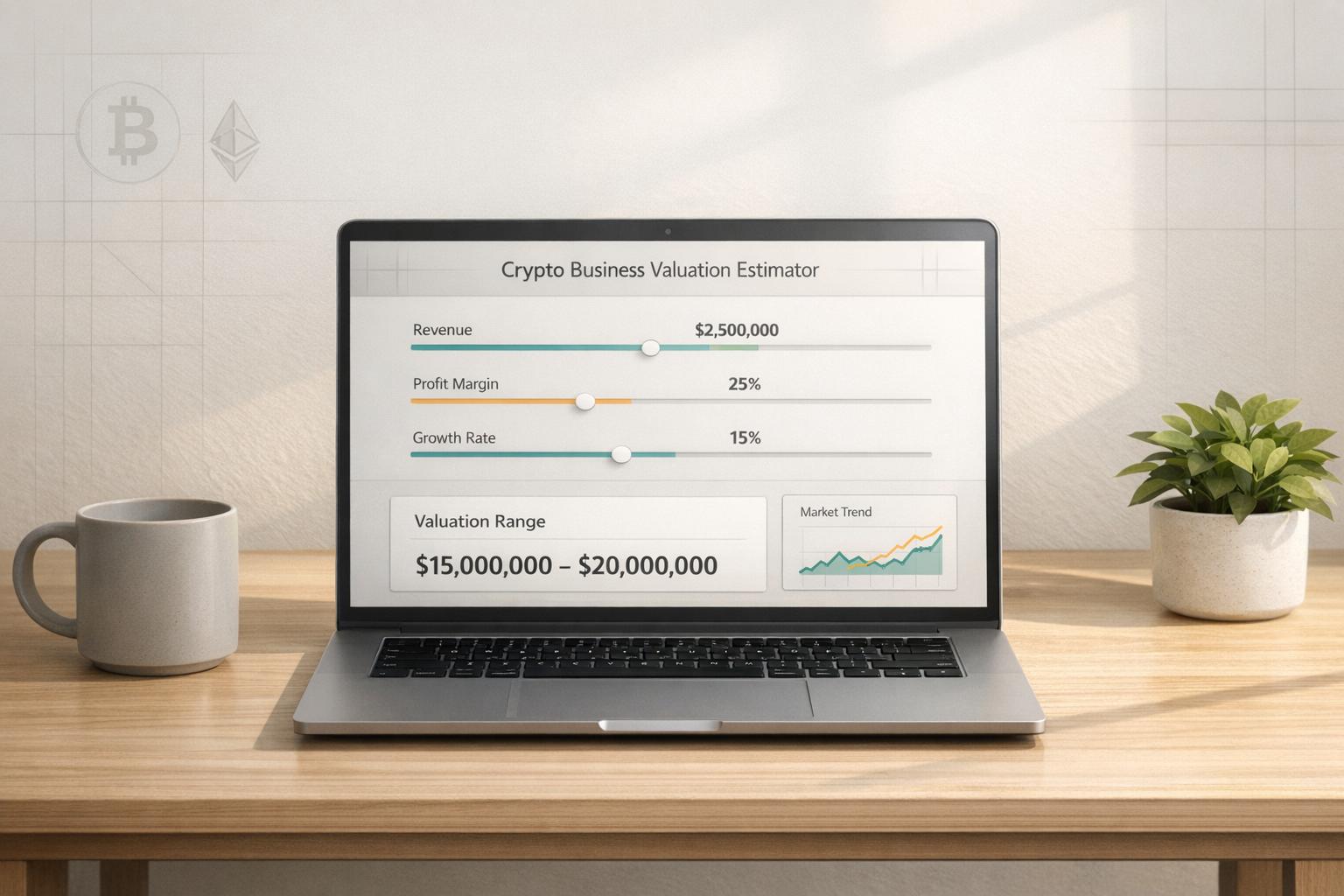
Crypto Business Valuation Estimator
Estimate your crypto business value with our free tool! Input revenue, profit margin, and growth rate for a quick valuation range. Try it now!
Fintech Regulation Compliance Checker
Check fintech compliance requirements by region and business type with our free tool. Ensure your startup meets key regulations easily!
Looking to Buy or Sell?
Get in touch with our team for personalized assistance