Workflow Analysis Tools for Regulated Industries

Workflow Analysis Tools for Regulated Industries
Workflow analysis tools are critical for businesses in regulated sectors like crypto, forex, and fintech. They automate compliance, reduce manual errors, and maintain audit-ready records to meet strict regulatory standards. These tools streamline processes, ensure data security, and help companies align with frameworks like SOC 2, GDPR, ISO 27001, and MiCA. They also play a key role in M&A due diligence by offering clear, automated workflows that provide transparency and reduce risks.
Key Highlights:
- Automation: Replaces manual processes with real-time evidence collection and audit trails.
- Compliance: Ensures adherence to regulations such as GDPR, CCPA, KYC, and AML.
- Integration: Works seamlessly with existing systems like CRMs, ERPs, and cloud platforms.
- Top Tools: Jinba, Kissflow, aiOla, ComplianceQuest, and Wrike cater to specific compliance needs.
These tools simplify compliance management and support businesses in scaling operations while staying aligned with regulatory requirements.
Live Demo: Automate compliance to accelerate your company‘s growth
sbb-itb-ba142f6
What to Look for in Workflow Analysis Tools
When selecting a workflow analysis tool, it’s essential to focus on features that cater to the specific needs of regulated industries. These tools must ensure compliance, streamline evidence collection, and integrate smoothly with your existing tech infrastructure. Without these capabilities, your business risks inefficiencies and potential regulatory issues.
Compliance Certifications and Standards
A reliable workflow tool should come with SOC 2 Type II and ISO 27001 certifications at a minimum. SOC 2 Type II ensures that your processes align with standards for security, availability, processing integrity, confidentiality, and privacy - key areas auditors examine closely [3]. ISO 27001, recognized globally, demonstrates strong information security management practices, which is critical if your operations span multiple jurisdictions.
For industries like Fintech and Forex, compliance with SOX Section 404 is essential. This standard, required by the SEC and FINRA, governs internal controls over financial reporting [4]. Crypto businesses, on the other hand, need tools that support KYC (Know Your Customer), AML (Anti-Money Laundering), and adhere to regional regulations such as MiCA in the EU and FCA guidelines in the UK [2]. Additionally, data privacy laws like GDPR (for European users) and CCPA (for California residents) should be baked into the platform [3].
These certifications and standards lay the groundwork for efficient automation and reliable evidence collection.
Automation and Evidence Collection
Manually gathering evidence for audits leaves room for errors and inefficiencies. Modern workflow tools solve this by attaching logs, screenshots, and approvals directly to tasks, creating a comprehensive audit trail [3]. Many tools now include AI-driven gap detection. For instance, Process Street’s AI agent, Cora, scans workflows to spot missing sign-offs, incomplete tasks, or overdue actions [4]. Time-stamped logs for every action or review can be exported instantly, reducing audit prep from weeks to a single click [3].
"With Process Street we've been able to bring documentation to life… allowing us to adapt processes quickly, improve governance and achieve consistent results."
– Linda White, Head of Technology Services, Colliers [3]
Automated reminders and escalations ensure critical tasks - like quarterly access reviews or vulnerability scans - are completed on time without manual follow-ups [4]. This constant state of audit readiness replaces the last-minute scramble with a proactive, streamlined approach [3].
While automation is key, the ability to integrate seamlessly with your current systems ensures the tool fits into your broader compliance strategy.
Integration with Enterprise Systems
A robust workflow tool should integrate via API with your existing systems, whether it’s your CRM, ERP, cloud infrastructure, or financial software. This eliminates manual data entry and reconciliation errors [3]. For Crypto and Forex firms, integration means pulling transaction data, wallet activity, and compliance checks straight from operational systems.
The best tools function as unified ecosystems, consolidating policies, calendars, and surveillance data into a single dashboard. This eliminates the need to juggle multiple tools and browser tabs [1]. Automated handoffs between departments like Finance, IT, HR, Legal, and Operations are especially important when regulatory controls affect multiple teams.
No-code customization is another must-have feature. It allows compliance and risk teams to design and adapt workflows without relying on developers [2]. For global operations, ensure the tool provides options for data residency in regions like the US, UK, EU, or UAE, or offers private cloud deployment within your Virtual Private Cloud [3].
"A huge win. Delivers cross-functional team collaboration."
– Alex Hauer, Senior Success Consultant, Salesforce [3]
Skematic, for example, boasts a 100% on-time deployment rate. Their onboarding process includes policy sharing, tailored environment setup, and API integration of employee accounts - all within four weeks [1].
Best Workflow Analysis Tools for Regulated Industries
These platforms highlight the capabilities needed to meet the demands of heavily regulated industries. The right workflow solution can slash operational costs by as much as 70% while ensuring you're always audit-ready [6]. Below are five tools tailored for compliance challenges in Crypto, Forex, and Fintech.
Jinba
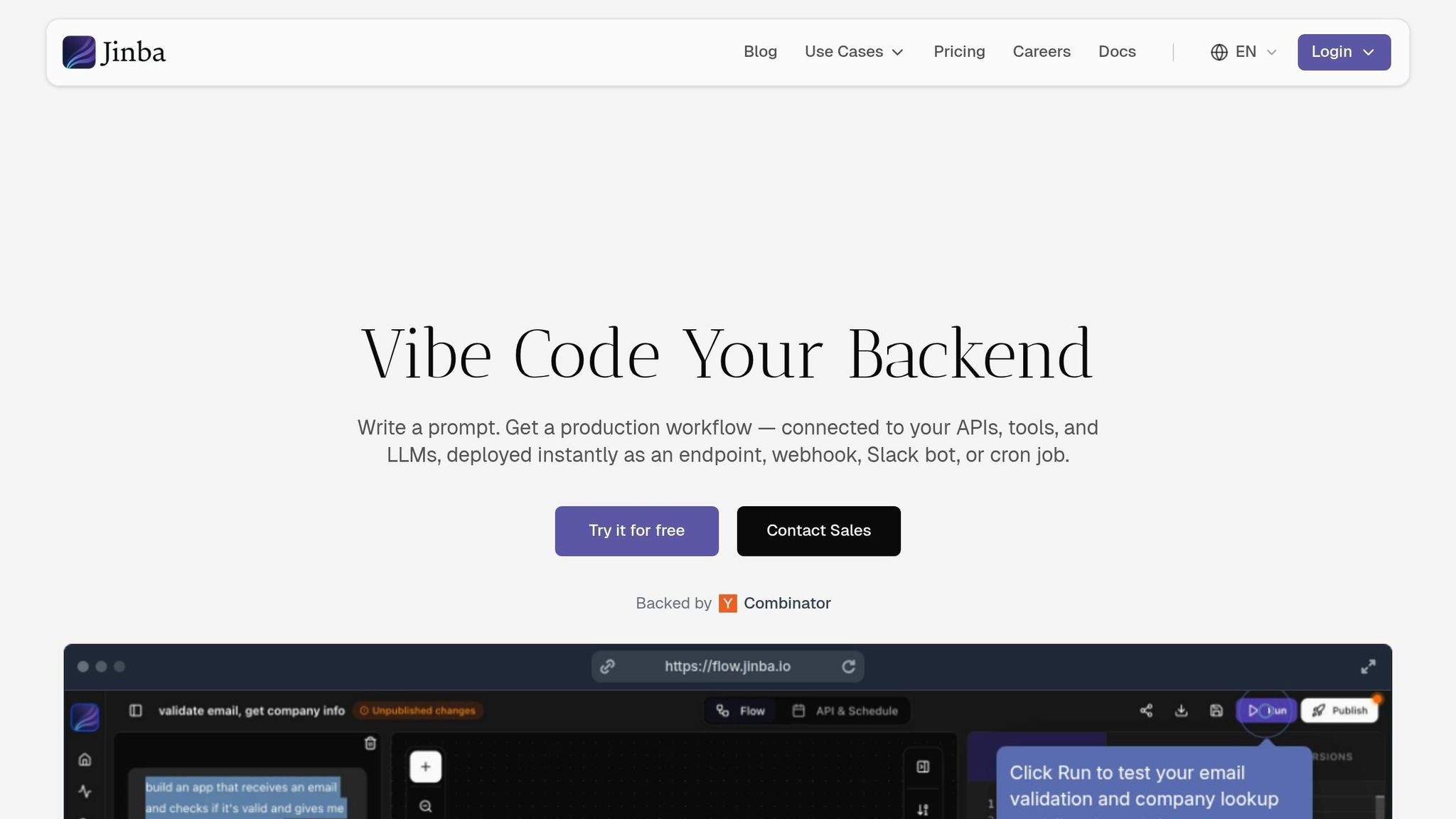
Jinba is a SOC II-compliant AI workflow platform trusted by over 40,000 enterprise users daily [8]. It's built for tasks like investment due diligence, deal monitoring, and legal contract analysis [10]. What sets Jinba apart is its dual-layer architecture: the Jinba Flow build layer and the Jinba App execution layer. This structure ensures users operate within pre-approved workflows, a key compliance safeguard. Sensitive data is protected through private AI model hosting via AWS Bedrock, Azure AI, or self-hosting, keeping it off public infrastructure [7].
Jinba also integrates with over 200 systems to automatically generate timestamped audit trails. Deployment options include on-premises, private cloud, or SaaS, offering flexibility for various organizational needs [9]. Pricing is based on active users and workflow executions, with credits allocated according to complexity and compute time [11].
"Quick integration with existing MCPs and the ability to deploy agents on the Jinba App help streamline biomedical data analysis, even for users with little programming knowledge."
– Haruo Mizutani (Ph.D.), Senior Specialist [5]
For similar compliance-focused solutions, platforms like Kissflow also provide pre-built frameworks.
Kissflow
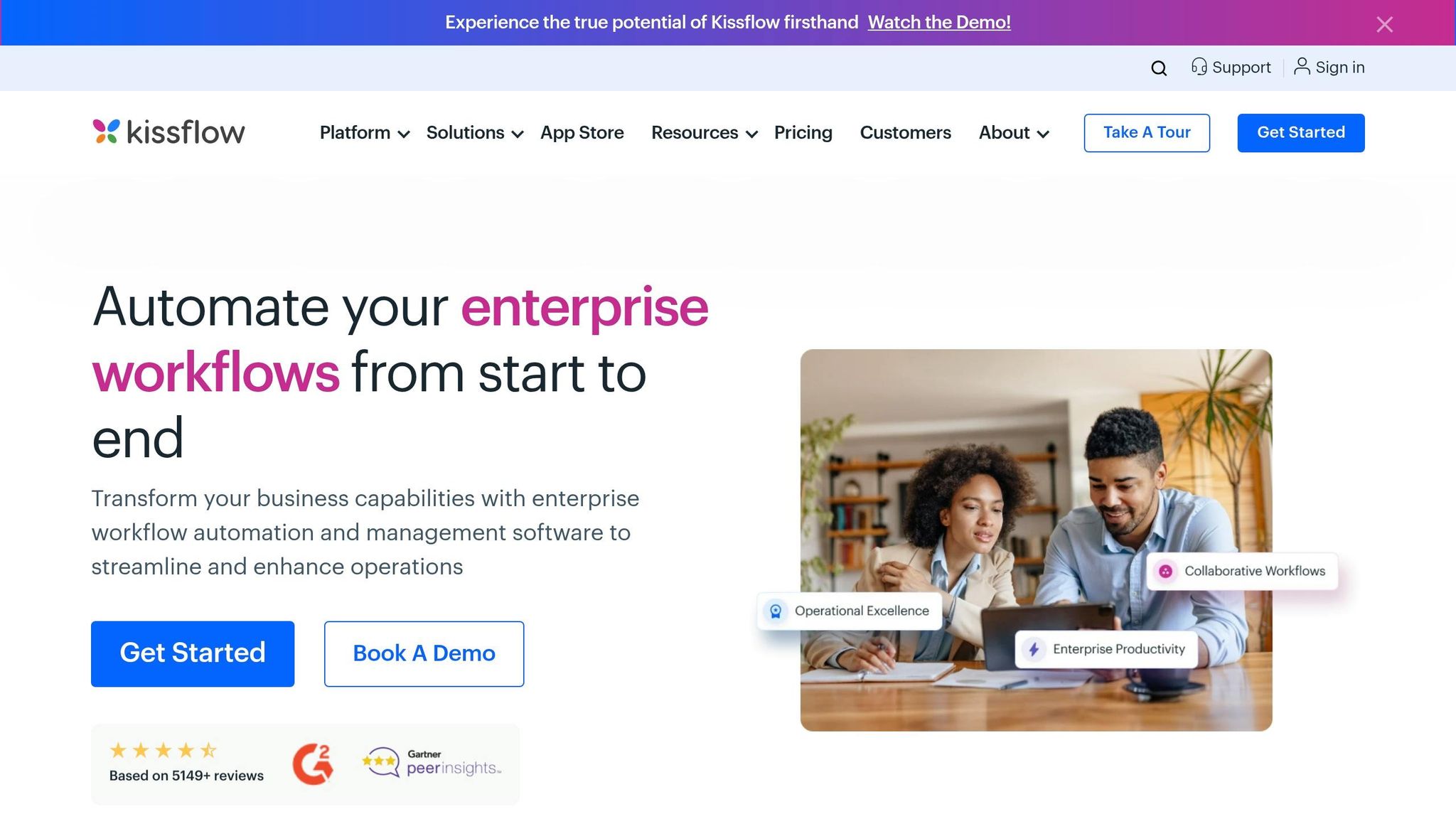
Kissflow is an enterprise-grade workflow management system designed with compliance in mind, particularly for Fintech and Forex. It comes with pre-built templates for processes like KYC, AML screening, and transaction monitoring. By using risk-based logic, it can automatically approve low-risk cases while escalating high-risk ones for senior review [6]. The platform also incorporates Role-Based Access Control (RBAC) and Single Sign-On (SSO), ensuring data access aligns with the principle of least privilege [7].
If you're looking for innovative approaches to real-time compliance tracking, aiOla offers a unique solution.
aiOla
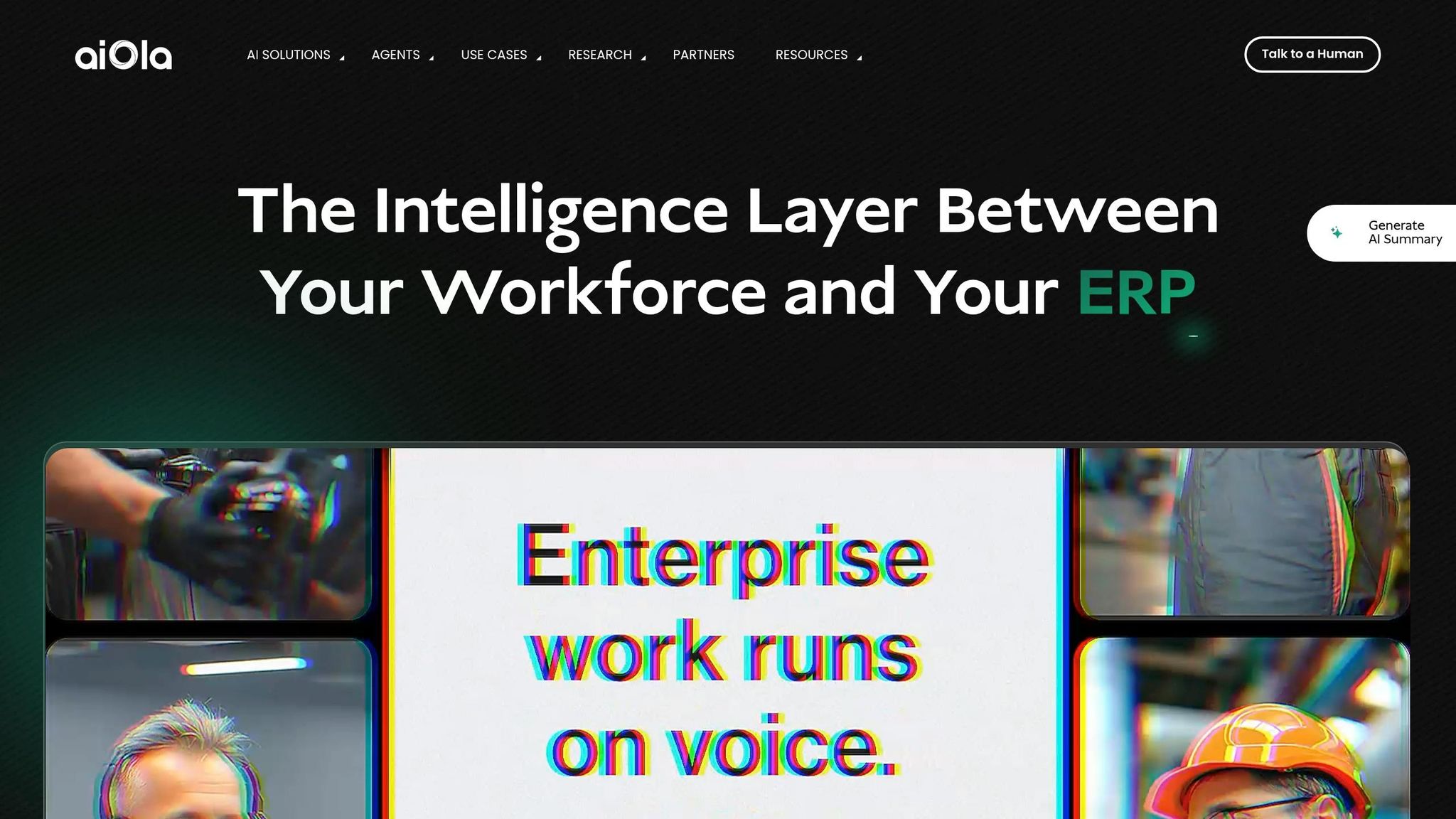
aiOla leverages voice-agent workflows to log compliance activities in real time, reducing the risk of manual errors. Spoken inputs are transformed into structured, timestamped records that feed directly into audit trails. Its Human-in-the-Loop (HITL) feature ensures that critical decisions are reviewed and approved manually, maintaining a balance between automation and human oversight [6]. For example, a voice-logged KYC check can automatically flag inconsistencies for further investigation.
Another standout tool, ComplianceQuest, simplifies the audit process through visual mapping.
ComplianceQuest
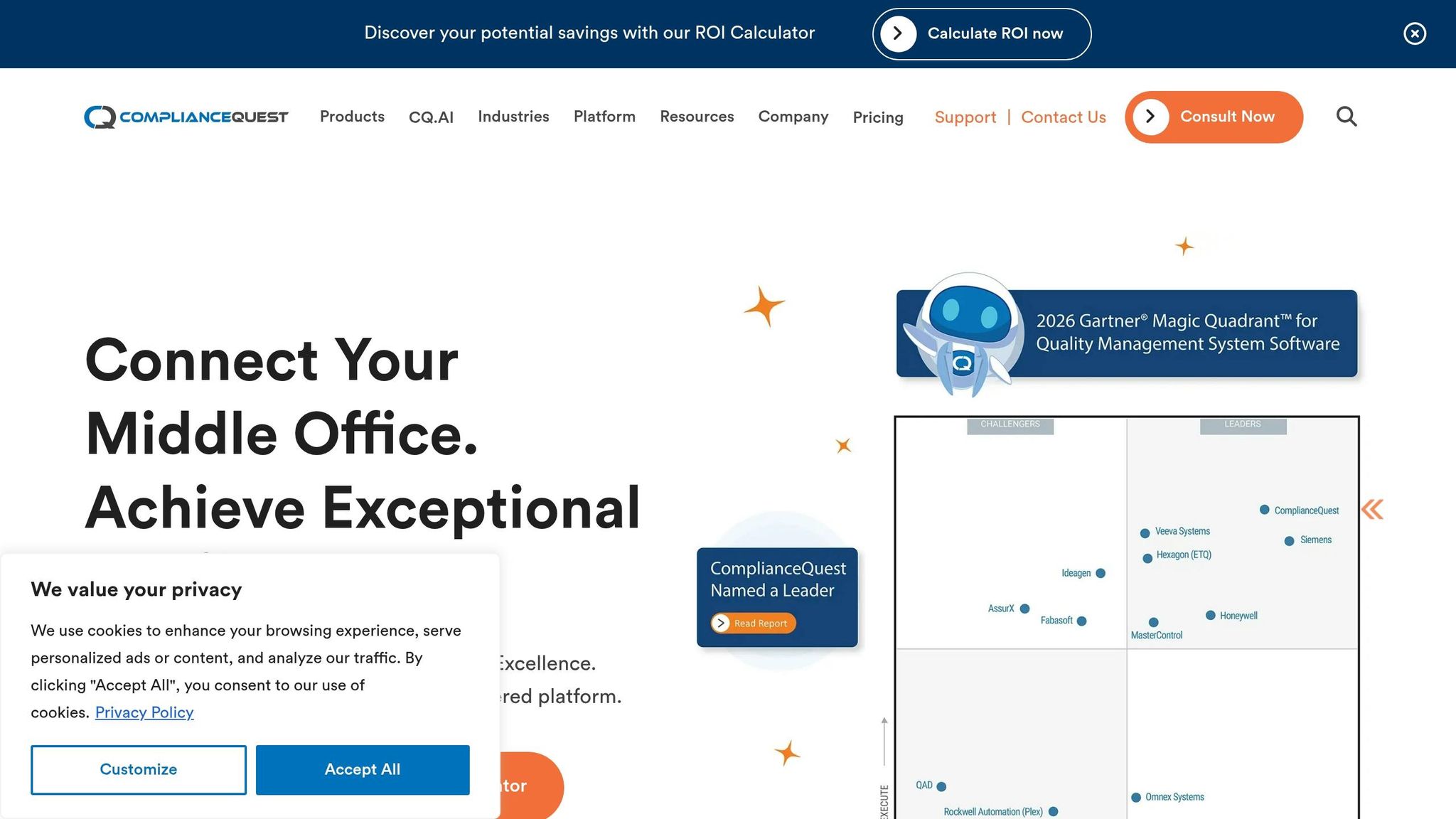
ComplianceQuest focuses on visual workflow mapping paired with audit-ready trails. Its flowchart editors are user-friendly, allowing non-technical auditors to grasp compliance workflows without delving into code [7]. The platform maintains immutable audit logs that include timestamps and user details, aligning with regulations like SOX, GDPR, and the EU's 6th Anti-Money Laundering Directive (6AMLD) [6]. Real-time monitoring replaces static snapshots, helping identify compliance issues before they escalate [7].
Wrike
Wrike is a collaborative work management platform tailored to regulated industries. It offers customizable workflows and enterprise-level security, enabling cross-functional teams - Finance, Legal, IT, and Operations - to collaborate on compliance tasks in a unified space. Wrike's approval workflows enforce multi-stage reviews for sensitive processes, while its reporting dashboards provide real-time updates for auditors and stakeholders. Features like custom request forms, automated task assignments, and granular permission controls make it easier to maintain accountability and traceability across complex operations.
Tool Comparison
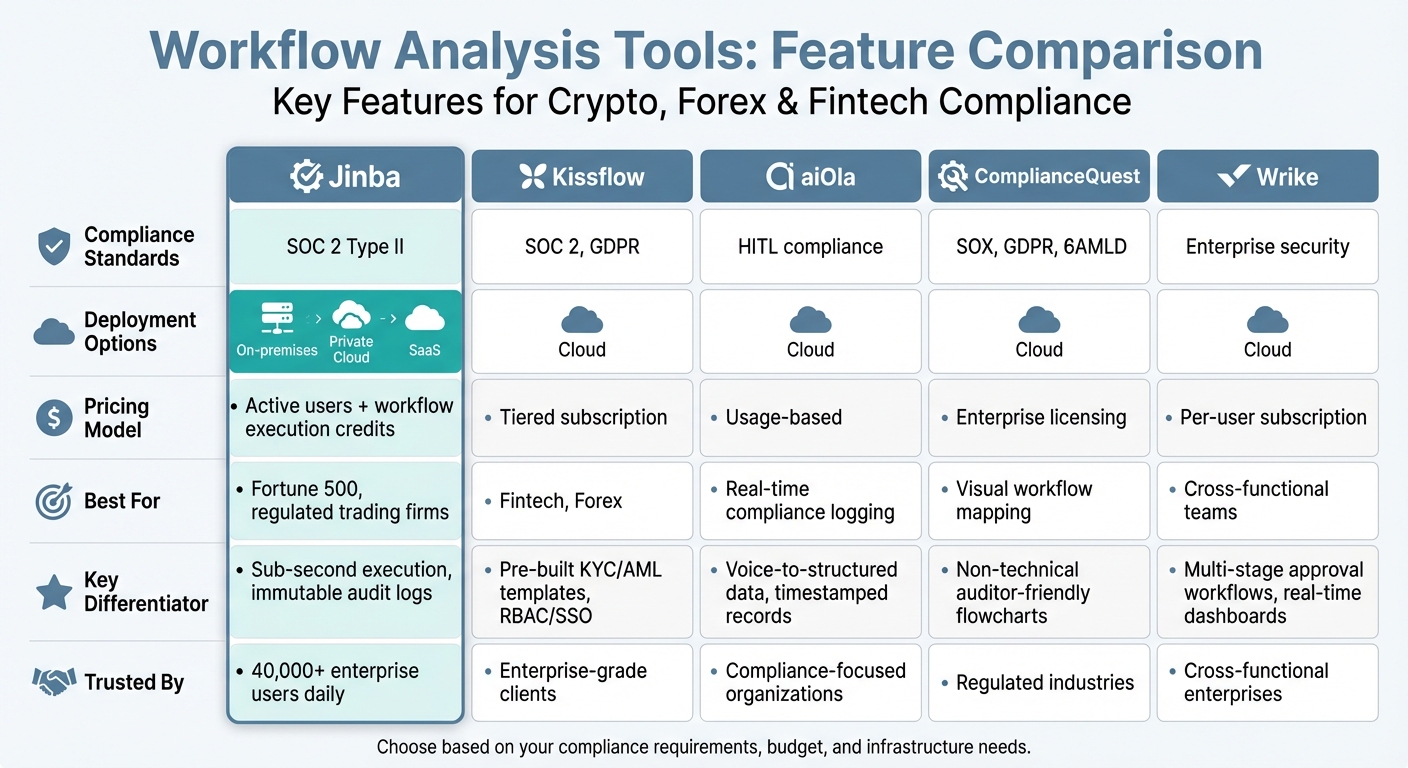
When picking a workflow analysis tool, your choice will hinge on factors like compliance requirements, budget, and existing infrastructure. The five tools reviewed here take different approaches to data sovereignty, audit trails, and deployment options - key considerations for M&A due diligence or navigating regulatory demands. Below is a table summarizing their standout compliance and operational features.
Comparison Table
| Tool | Compliance Standards | Deployment Options | Pricing Model | Best For | Key Differentiator |
|---|---|---|---|---|---|
| Jinba | SOC 2 Type II [14] | On-premises, Private Cloud, SaaS [9] | Active users + workflow execution credits [11][12] | Fortune 500, regulated trading firms [14] | Sub-second execution, immutable audit logs [9][14] |
| Kissflow | SOC 2, GDPR [7] | Cloud | Tiered subscription | Fintech, Forex | Pre-built KYC/AML templates, RBAC/SSO [6][7] |
| aiOla | HITL compliance [6] | Cloud | Usage-based | Real-time compliance logging | Voice-to-structured data, timestamped records [6] |
| ComplianceQuest | SOX, GDPR, 6AMLD [6] | Cloud | Enterprise licensing | Visual workflow mapping | Non-technical auditor-friendly flowcharts [7] |
| Wrike | Enterprise security | Cloud | Per-user subscription | Cross-functional teams | Multi-stage approval workflows, real-time dashboards |
Jinba stands out for its flexible deployment options, offering on-premises and private cloud setups that prioritize low latency and strict data control - especially valuable in highly regulated industries. Kissflow and ComplianceQuest, on the other hand, excel in automating evidence collection. Their tools generate audit-ready documentation with consistent, timestamped logs, while ComplianceQuest simplifies workflows with visual flowcharts that are easy for non-technical users to understand during audits [7].
For companies navigating M&A, data sovereignty is a top priority. Jinba's ability to operate within private or on-premises environments ensures sensitive data stays under your control [7][9]. This is particularly important for firms managing regulated records, where non-compliance - such as a GDPR violation - can result in fines of up to 4% of global annual revenue [13]. The deployment flexibility offered by Jinba provides a critical safeguard against such risks.
This comparison gives decision-makers the metrics they need to choose the right tool for regulatory compliance and M&A due diligence in tightly regulated sectors.
How to Use Workflow Tools for M&A Due Diligence
How to Map and Analyze Workflows
Start by importing Virtual Data Room (VDR) data into an AI-powered workspace. Modern platforms can automatically sort documents into categories like legal, tax, financial, and commercial, while also identifying discrepancies between management accounts and audited financials. For instance, in early 2026, a Big Four Advisory partner used Plausity to cut a three-week due diligence process across over 30 industries down to just five days by analyzing nine workstreams at once [15].
Set up risk-based routing with conditional logic to automatically escalate tasks based on investment size or regulatory limits. For high-risk acquisitions, workflows can trigger enhanced due diligence protocols without needing manual input. Every finding should link back to its source document, making it easy for auditors to verify [15].
Map workflows across nine key areas: Commercial, Financial, Legal, Tax, Organization/Compliance, Tech, Cybersecurity, ESG, and Website Compliance. Use materiality scoring to rank risks by their financial and legal impact, helping teams zero in on potential deal-breakers. Findings can then be converted into actionable 100-day post-acquisition roadmaps, complete with financial estimates, to bridge the gap between pre-close diligence and post-close integration [15].
Once workflows are clearly outlined and prioritized, cross-functional teamwork becomes critical for executing due diligence effectively.
Cross-Functional Team Collaboration
Use standardized integration playbooks to guide teams from Day 1 to Day 100. Assign clear ownership for every task, set deadlines, and track updates across departments like legal, HR, finance, and IT. These playbooks help teams adapt quickly, improve governance, and maintain consistency during complex transactions.
Implement dual-flag verification workflows, where the person completing a task marks it as done, and the recipient confirms receipt. This ensures everyone stays aligned. Role-based access should be granted to external counsel and consultants, maintaining data security while enabling collaboration. Real-time dashboards can highlight bottlenecks and overdue tasks instantly, giving the deal team a clear view of progress. Prioritized findings feed directly into team actions, ensuring operational due diligence translates into well-coordinated, secure execution across all departments.
Conclusion
Selecting the right workflow analysis tool is crucial for regulated industries navigating complex compliance requirements and M&A activities. The tools highlighted - Jinba, Kissflow, aiOla, ComplianceQuest, and Wrike - offer distinct advantages, such as automating evidence collection, centralizing documentation, and delivering real-time insights into risks. These features transform compliance from a periodic task into a continuous, audit-ready process.
When evaluating these tools, focus on those that align internal workflows with regulatory standards (like FINRA Rule 3110 or SEC guidelines), provide no-code customization options, and ensure compliance with data residency regulations [2][16]. With advancements in AI-driven compliance solutions and integrated ecosystems, businesses can move away from fragmented spreadsheets to scalable platforms that grow with transaction volumes.
For companies in sectors like crypto, forex, and fintech - especially those involved in acquisitions or preparing for sale - centralized workflow tools act as a reliable source of truth. They streamline due diligence, simplify regulatory processes like KYC or transaction monitoring, and support cross-functional collaboration, ultimately enabling compliance and fostering strategic growth.
FAQs
Which compliance certifications should a workflow tool have?
A workflow tool designed for regulated industries must prioritize compliance by incorporating certifications such as FINRA and SEC for financial services. Additionally, it should align with key standards like GDPR, MiFID II, and AML regulations. These certifications and standards are essential for upholding trust and ensuring adherence to industry-specific legal and regulatory requirements.
How do workflow tools create audit-ready evidence automatically?
Workflow tools leverage built-in AI to automatically manage, enforce, and monitor compliance documentation and controls in real time. This approach keeps records current and simplifies the compliance process, ensuring businesses are always prepared for audits.
What matters most when using workflow tools for M&A due diligence?
The key aspects to focus on when using workflow tools for M&A due diligence are source traceability, process automation, and comprehensive data analysis. These factors play a crucial role in spotting potential risks, staying compliant, and making decisions more quickly and accurately.
Related Articles

KYC vs. AML for Payment Processors: What to Know
KYC confirms identity at onboarding, but only continuous AML monitoring stops payment processors from becoming conduits for financial crime.

Checklist for Secure Player Database Transfers
Step-by-step checklist for secure player database transfers: compliance, encryption, vendor vetting, zero-trust, integrity checks, and audits.
Ultimate Guide to Payment Compliance in iGaming
Roadmap for building compliant iGaming payment systems: AML/KYC, PCI‑DSS, multi‑PSP setup, chargeback controls and jurisdictional risks.
Looking to Buy or Sell?
Get in touch with our team for personalized assistance